Studio Praxium
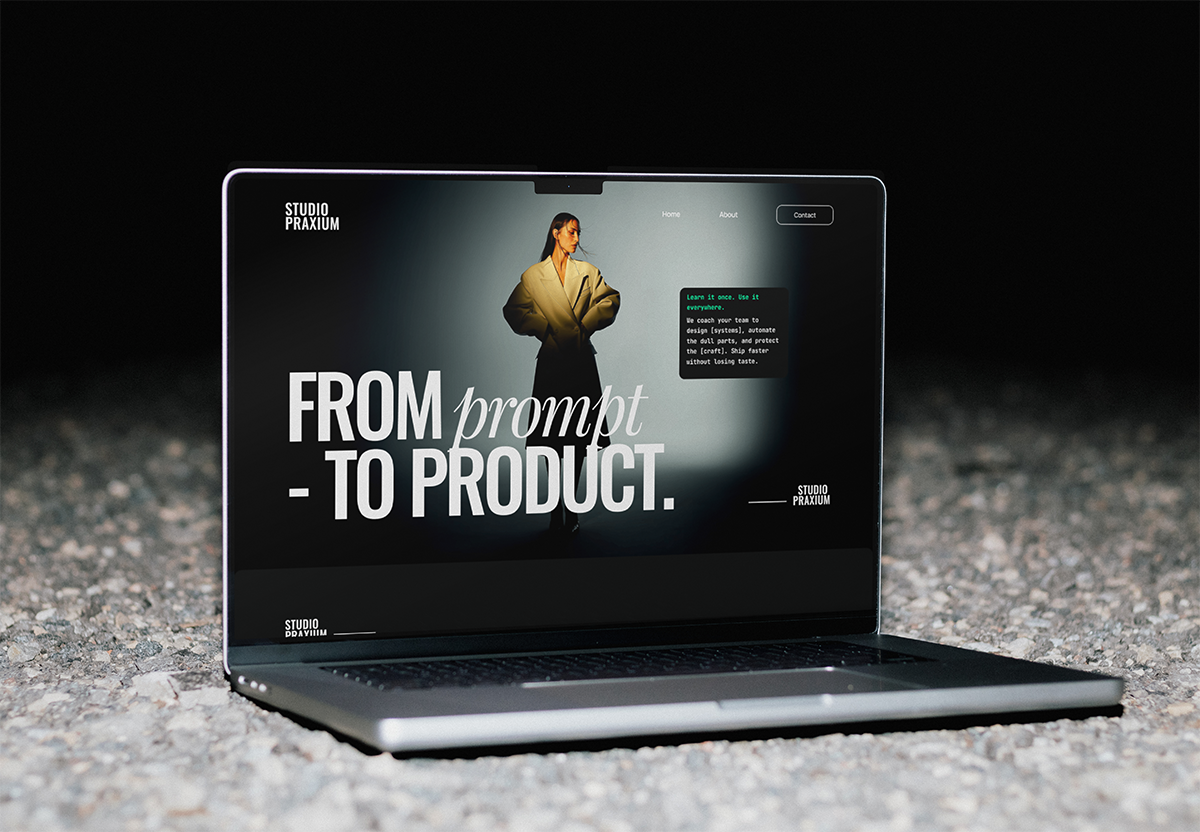
"Exploring how AI can amplify creative thinking, streamline workflows, and unlock new ways of designing without replacing human intent.".
Studio Praxium explores the intersection of design and artificial intelligence, focusing on how emerging tools can enhance creative workflows rather than replace them. The project positions AI as an assistant within the creative process, supporting designers and web developers by accelerating ideation, prototyping, and problem-solving while keeping creative judgment firmly human. By treating prompt language as a design input, the work demonstrates how clarity of intent and structured direction allow AI to improve output quality and reduce friction across workflows. Through live demonstrations, experimentation, and applied outcomes, the project reframes AI as infrastructure for better creative thinking, not a substitute for it.
"AI becomes useful the moment it is treated like a collaborator rather than a replacement. Its value lies in speed, variation, and support—not authorship.".

"".
Studio Praxium was created to help clients understand how artificial intelligence can be integrated into the everyday workflow of creative designers and web developers. The project positions AI as an assistant that accelerates ideation, exploration, and problem‑solving, while keeping creative judgment, taste, and decision‑making firmly human. By demonstrating practical use cases rather than speculative futures, the work reframes AI as infrastructure for better thinking, not a threat to creative roles.
"".
%20-%20Copy.png)
"Prompting is not instruction—it is direction. The clearer the intent, the more control the designer retains.".
"".
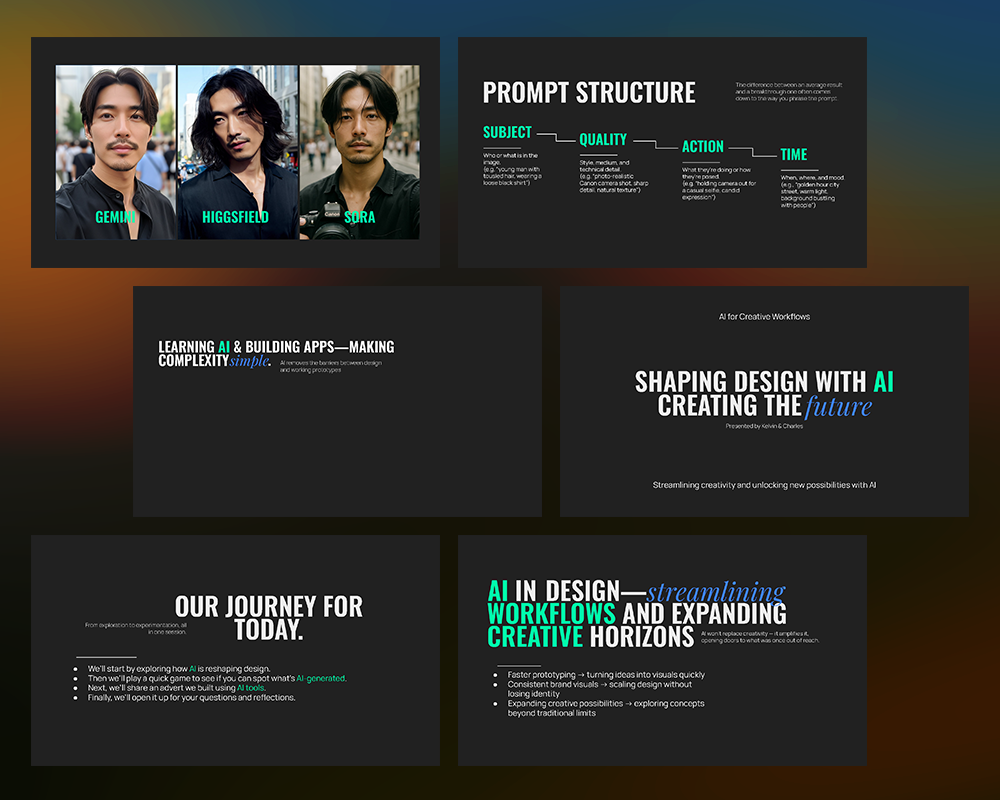
This chapter explores how structured prompt language can be treated as a repeatable design input. Rather than relying on trial and error, Studio Praxium demonstrates how prompts can function like briefs—defining intent, constraints, tone, and output format. This approach allows designers and developers to reuse language patterns across tasks such as layout exploration, copy drafting, motion ideation, and component prototyping. The images shown illustrate how small shifts in wording produce dramatically different results, reinforcing the idea that control comes from clarity, not from the tool itself.
"AI proves its value only when ideas survive contact with real outputs, real constraints, and real timelines.".
"".
The motion and layout outputs in this section show how AI‑assisted workflows translate from experimentation into tangible deliverables. Instead of replacing creative direction, AI is used to generate variations, test messaging, and accelerate early production stages. Designers remain responsible for selection, refinement, and final composition, ensuring that authorship and quality are preserved while iteration becomes faster and more confident.
"".
"".
"".
"".
"A system succeeds when it scales without losing clarity, hierarchy, or voice.".
"".
This chapter focuses on how a single creative direction can scale across desktop, mobile, and print formats. The layouts demonstrate a systems‑first mindset, where hierarchy, spacing, and messaging remain consistent despite changing constraints. AI support is applied to speed up layout exploration, copy variations, and responsive adjustments, allowing teams to evaluate options early and commit with confidence once decisions are made.
"".
.png)
"".
.png)
"".
"".
"If a concept works on mobile, it usually works everywhere else.".
"".
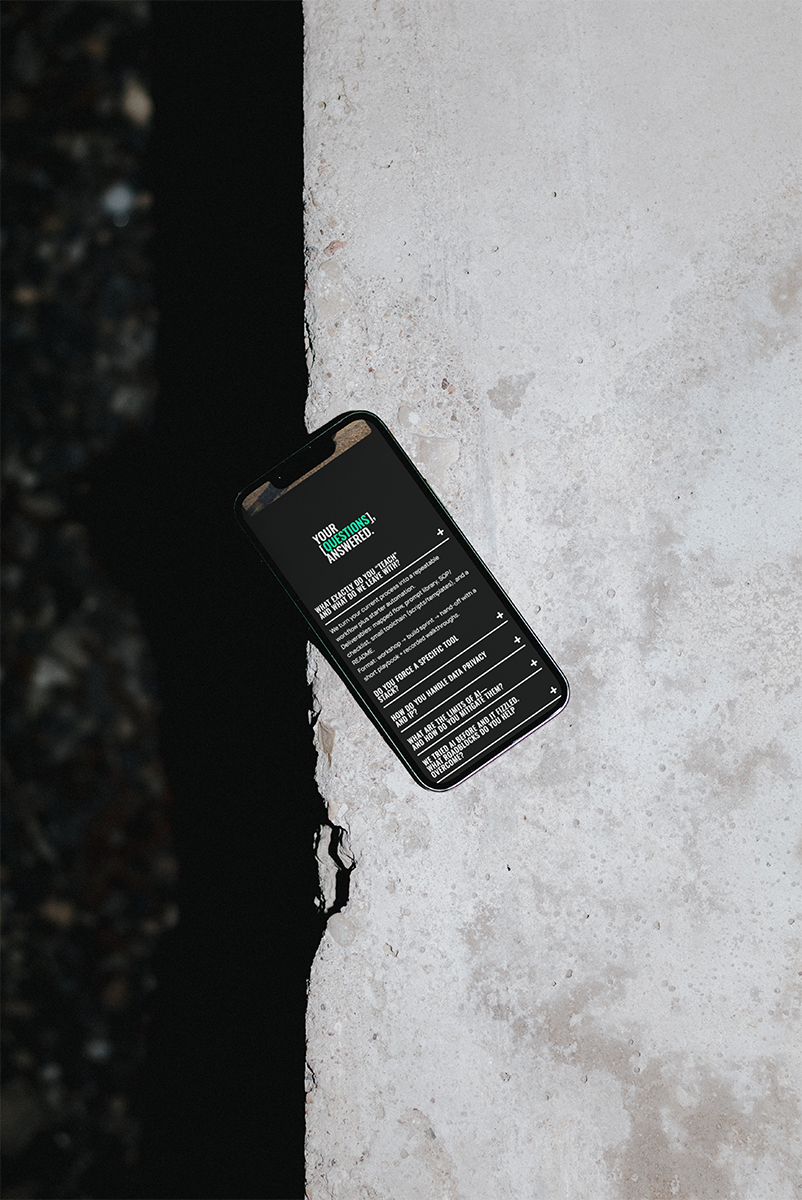
The final chapter reinforces the importance of validating design decisions on mobile early in the process. These screens show how hierarchy, spacing, and messaging adapt under tighter constraints, while still maintaining clarity and intent. AI assistance supports this stage by helping teams explore truncation, alternative layouts, and quick variations, reducing late‑stage surprises and improving overall production efficiency.
"".
"".
.png)